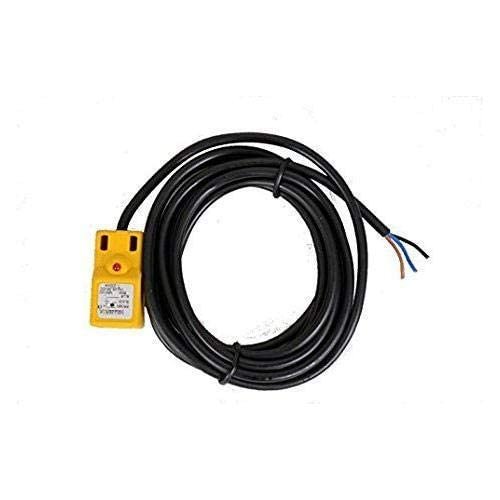
Here’s a detailed description of an NPN sensor for an agarbatti (incense stick) machine:
An NPN sensor is a type of proximity or photoelectric sensor commonly used in automated machinery, including agarbatti (incense stick) manufacturing machines. It plays a critical role in detecting the presence, position, or movement of components during the production process, enabling precise control and ensuring smooth operation.
The term NPN refers to the transistor output type used inside the sensor. In an NPN sensor, the output transistor connects the load to the ground (negative) when activated. When the sensor detects a target (e.g., the edge of an agarbatti stick or the presence of raw material), the sensor switches on and allows current to flow from the load to the ground, signaling the machine’s control system.
In agarbatti machines, the NPN sensor is usually employed to:
The sensor emits an infrared or visible light beam (in case of photoelectric types) or detects magnetic/metallic presence (if inductive) to sense the object. When the object comes within the sensor’s detection range, the sensor output changes state, sending a signal to the PLC (Programmable Logic Controller) or microcontroller managing the machine.
In an agarbatti machine, as the bamboo sticks are fed into the coating drum, an NPN sensor placed near the feeding point detects the presence of each stick. When a stick passes the sensor, it sends a signal to the PLC, which then controls the coating drum’s rotation and the powder dispensing mechanism accordingly.
If the sensor detects no stick (e.g., due to a jam or empty feeder), the PLC can trigger an alarm or halt the machine to prevent faulty products or machine damage.
The control system reads the output signal to determine the presence or absence of agarbatti sticks.
An NPN sensor is an essential component in automated agarbatti manufacturing machines. It reliably detects the presence and position of incense sticks during production, enabling automation, improving accuracy, reducing waste, and ensuring high-quality output. Its robustness and ease of integration make it a popular choice in the agarbatti industry.
If you want, I can also help you with a wiring diagram or recommend specific sensor models used in agarbatti machines!
You Save: ₹149.00 (30%)





Established in year 2018, “Avis Industries” is manufacturing Aggarbati Raw Material, Incense Machine Spare Part, Incense Sticks etc.
Contact Person: Abhishek Singh
21, BIRESH PALLY, SURYATARON APPARTMENT, N S. P. ROAD, MADHYAMGRAM, North 24 Parganas, West Bengal, 700129
Phone Number: +91 79802 33478
E-mail : support@agarbattikart.com
FOR ESCALATION : md@agarbattikart.com
Designed By Bariza Software Solutions © 2022